The New Gilded Age of Survival: Why Billionaires are Building "Doomstead" Bunkers
ALL NEWSWORLD
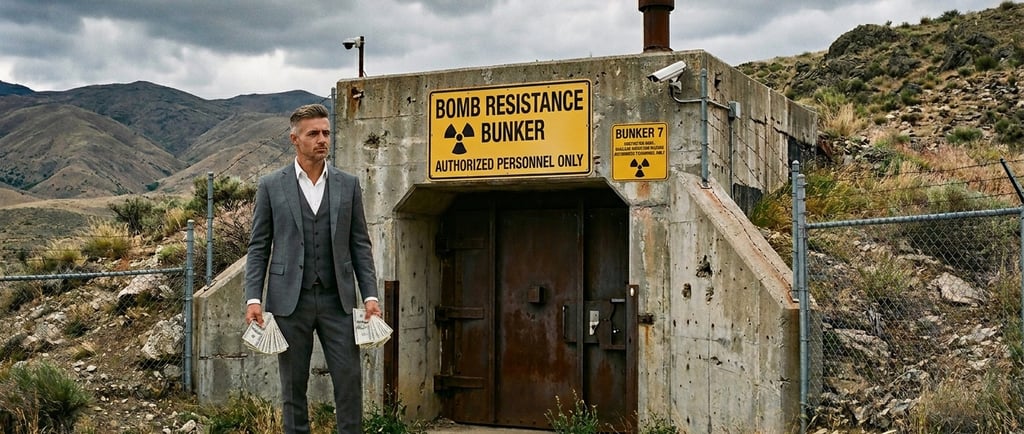
In the remote corners of Kauai, Hawaii, a massive construction project has been quietly unfolding. Hidden behind high walls and guarded by security, Mark Zuckerberg’s "Koolau Ranch" is reported to include a 5,000-square-foot underground shelter, complete with its own energy and food supplies and a blast-resistant metal door.
Zuckerberg isn’t alone. From Peter Thiel’s attempts to build a fortified estate in New Zealand to a growing list of anonymous Silicon Valley elites purchasing decommissioned missile silos in Kansas, the ultra-wealthy are increasingly investing in "bomb-resistance" luxury. But what is driving this sudden rush to go underground?
1. The "Poly-Crisis" Mentality
We live in an era of overlapping global threats. For those with the resources to see every data point, the world looks increasingly fragile. Billionaires aren't just worried about one thing; they are worried about the convergence of several:
Nuclear Escalation: Geopolitical tensions have brought "nuclear readiness" back into the mainstream headlines.
Climate Collapse: Extreme weather events and rising sea levels make self-sustaining, fortified retreats look like a logical insurance policy.
Social Unrest: Growing wealth inequality leads to fears of "the pitchforks coming"—a scenario where civil order breaks down and private security becomes the only law.
2. The Silicon Valley "Prepper" Culture
There is a specific brand of "survivalism" within the tech industry. For many founders, building a bunker is seen as the ultimate "edge case" engineering problem. Just as they build redundancies into their servers to prevent a site crash, they are building redundancies into their lives to prevent a "civilization crash."
3. Luxury as Autonomy
Modern bunkers are a far cry from the cramped, concrete tubes of the Cold War. Companies like Oppidum and the Survival Condo project offer:
Hydroponic gardens and specialized air filtration.
Swimming pools, cinemas, and gyms to simulate a normal life underground.
Sustainable Power: Massive battery arrays and geothermal energy to ensure they don't rely on a failing national grid.
The Ethical Dilemma: "The Event"
In his book Survival of the Richest, theorist Douglas Rushkoff describes a meeting with billionaires who asked him how to maintain control over their security guards after "The Event" (their term for a total societal collapse).
This highlights the dark side of the bunker trend: The Insulation Paradox. Rather than using their vast wealth to fix the systemic issues—like climate change or social instability—some of the world's most powerful people are choosing to simply outlive the consequences in a private, high-tech fortress.
The Reality Check
While a "bomb-resistant" bunker provides a sense of safety, critics argue it is a false one. A bunker is only as good as the community around it. If the global economy and environment truly collapse, a billionaire in a hole in the ground isn't a king—they are simply a well-supplied prisoner.
For now, however, the construction continues. As long as the future feels uncertain, the world’s elite will continue to trade their digital billions for concrete, steel, and a few hundred feet of dirt.