Pope Leo Signals End to Rhetorical Standoff, Declines Debate with President Amid Rising Global Tensions
ALL NEWSHEADLINESWORLD
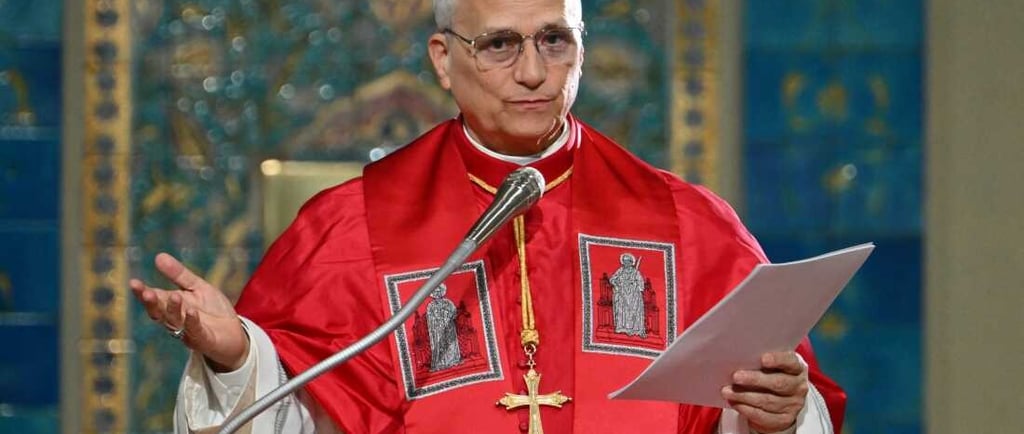
VATICAN CITY — April 19, 2026
In an extraordinary Sunday afternoon address that has reverberated through diplomatic circles, Pope Leo utilized a scheduled press briefing at the Apostolic Palace to issue a definitive "ceasefire" in his ongoing public dispute with the President. Breaking from the traditionally guarded language of the Holy See, the Pontiff signaled a desire to pivot away from the political arena, stating clearly that he has "no interest" in participating in a public debate.
A Measured Response to Escalating Friction
The tension between the Vatican and the administration had reached a fever pitch over the last several weeks, fueled by disagreements over international trade ethics and recent shifts in migration policy. Today’s statement, delivered before a crowded room of international correspondents, was seen as a strategic move to regain control of the narrative.
"The chair of St. Peter is a platform for the Gospel, not a podium for partisan sparring," Pope Leo remarked, his tone described by those in attendance as firm yet serene. "I have no interest in debating the President. While we may hold differing views on the mechanics of governance, my focus remains on the spiritual welfare of the faithful and the protection of the vulnerable."
Key Pillars of the Address
The Pope’s speech, which lasted approximately twenty minutes, focused on three core areas designed to refocus the Church’s mission:
1. The Distinction Between Policy and Morality
Leo argued that the Church’s role is to provide a "moral compass" rather than to engage in the "nitty-gritty of legislative drafting." He suggested that by engaging in a debate with a sitting head of state, the Papacy risks being reduced to a political entity, a move he described as a "disservice to the universal nature of the Church."
2. Call for "Quiet Diplomacy"
In a direct critique of modern political discourse, the Pope lamented the rise of "digital-age shouting matches." He called for a return to traditional diplomatic channels—specifically mentioning the role of the Secretariat of State—asserting that complex global issues are best resolved through patient, private negotiation rather than televised confrontation.
3. Urgent Global Priorities
Redirecting the spotlight, the Pope highlighted the "Islamabad Initiative" and ongoing peace efforts in the Middle East as the true priorities of the year. "The world does not need two leaders arguing on a stage," he said. "The world needs two leaders working, in their respective spheres, to ensure that children in conflict zones can wake up to a day of peace."
Analysis: A Strategic Withdrawal?
Vatican analysts believe that by declining the debate, Pope Leo is exercising "soft power" to de-escalate a situation that was beginning to overshadow his pastoral agenda.
"This isn't a retreat; it's a recalibration," says Dr. Elena Rossi, a senior fellow in Contemporary Ecclesiology. "By refusing to step into the ring, he effectively ends the fight. He is betting that the public is more interested in stability than in seeing a religious leader and a political leader trade barbs."
Global Reaction and Next Steps
While the President’s office remained silent throughout Sunday evening, sources within the administration suggest a formal statement may be issued by Monday morning. Meanwhile, international leaders have largely praised the Pope's call for calm, viewing it as a necessary step to prevent further polarization during a delicate period for global geopolitics.
As the bells of St. Peter’s Basilica rang out following the address, the atmosphere in the Vatican was one of cautious optimism. For now, the "Great Debate" that had been teased by pundits appears to be off the table, replaced by a renewed, albeit fragile, hope for diplomatic decorum